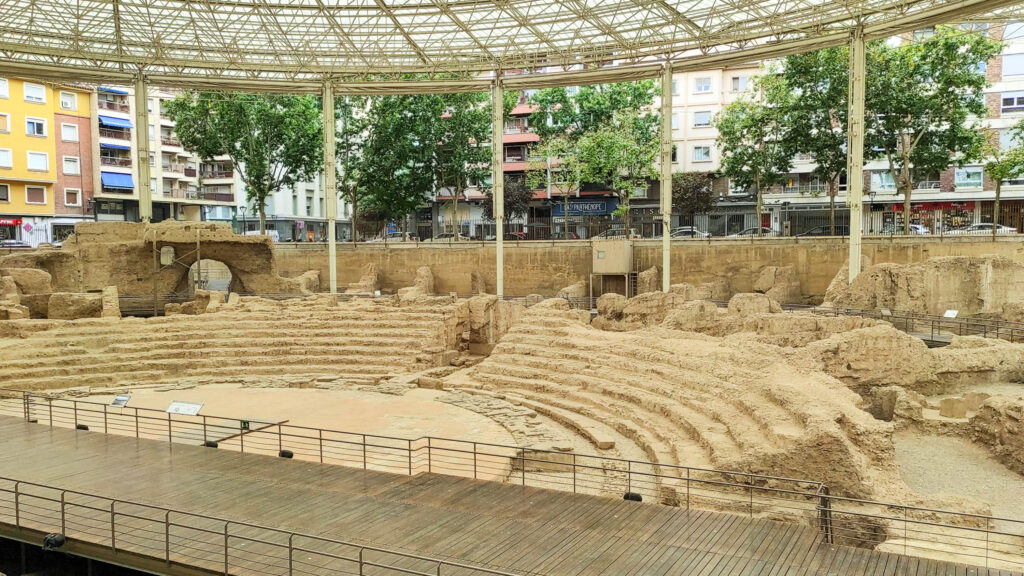


Zaragoza is a city that quietly surprises its visitors. With over two millennia of history nestled along the banks of the Ebro, it offers a unique blend of Roman ruins, Islamic architecture, and baroque domes, all within a walkable historic center. Founded by the Romans as Caesaraugusta during the reign of Emperor Augustus, Zaragoza still retains traces of its past as an imperial colony. Beneath today’s Plaza del Pilar and La Seo, you can explore the remains of the Roman forum, baths, and theatre, which serve as reminders of its former status as a bustling economic hub in the Ebro Valley. These underground spaces beautifully contrast with the lively modern plaza above, especially if you enjoy experimenting with low light and the textures of stone and brick.
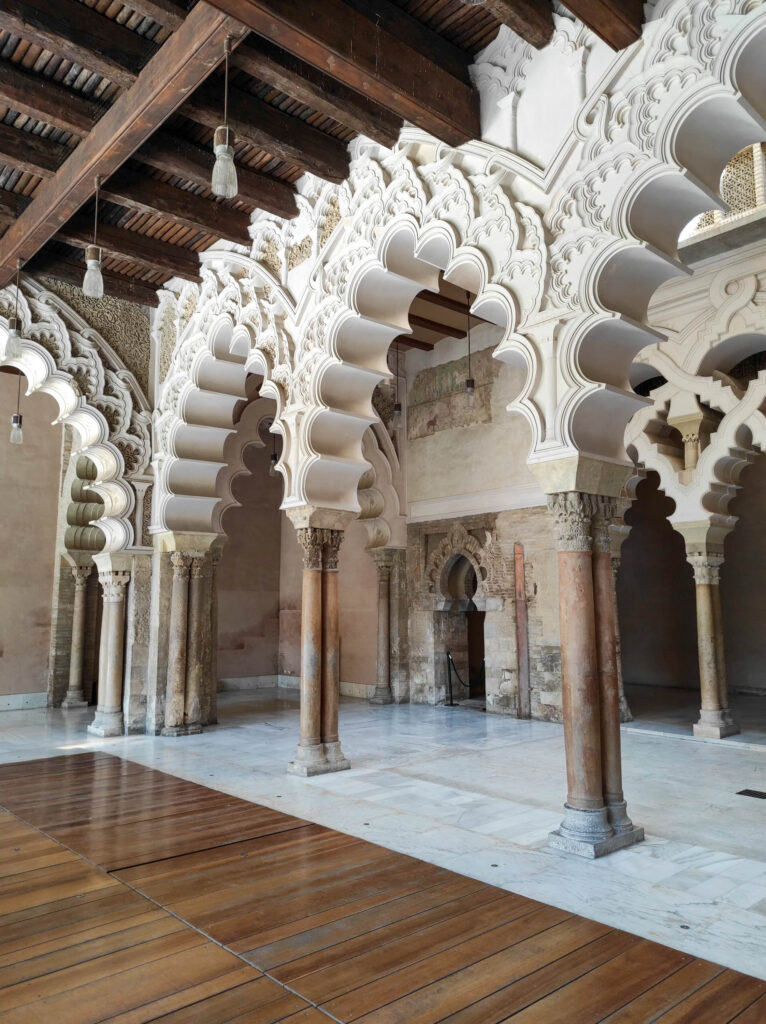
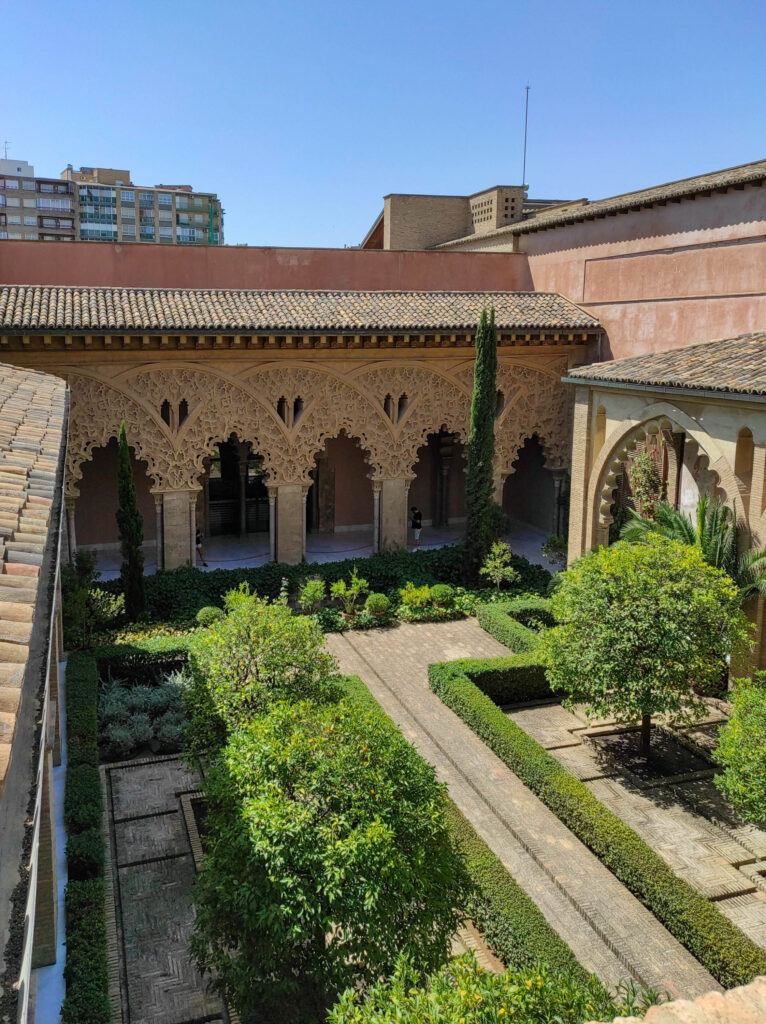
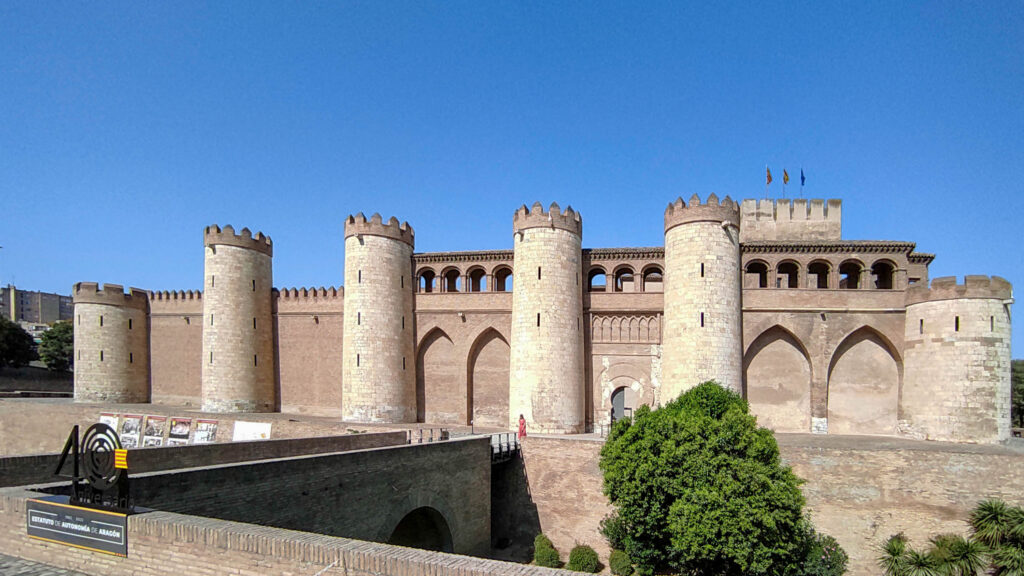
Following Rome, the city thrived under Muslim rule as the capital of the Taifa of سرقسطة Saraqusṭa during the Al-Andalus period, renowned for its defensive walls and elegant palaces. The most prominent architectural legacy from that era is the Aljafería Palace, a fortified Islamic palace now almost unexpectedly nestled within the modern city. Its horseshoe arches, geometric stucco, and garden courtyards are ideal for symmetrical compositions, frame-within-a-frame shots, and studies of light filtering through arcades. The Christian conquest in 1118 transformed the then-named Çaragoça into the capital of the Kingdom of Aragon, introducing new layers of Gothic, Renaissance, and Mudéjar architecture. The clearest example of this layered history is La Seo, the Cathedral of the Saviour, built over the main mosque and now a World Heritage site. Its exterior blends Gothic lines with intricate Mudéjar brick and ceramic decoration, offering a façade that rewards both close-up detail shots and wide architectural views.
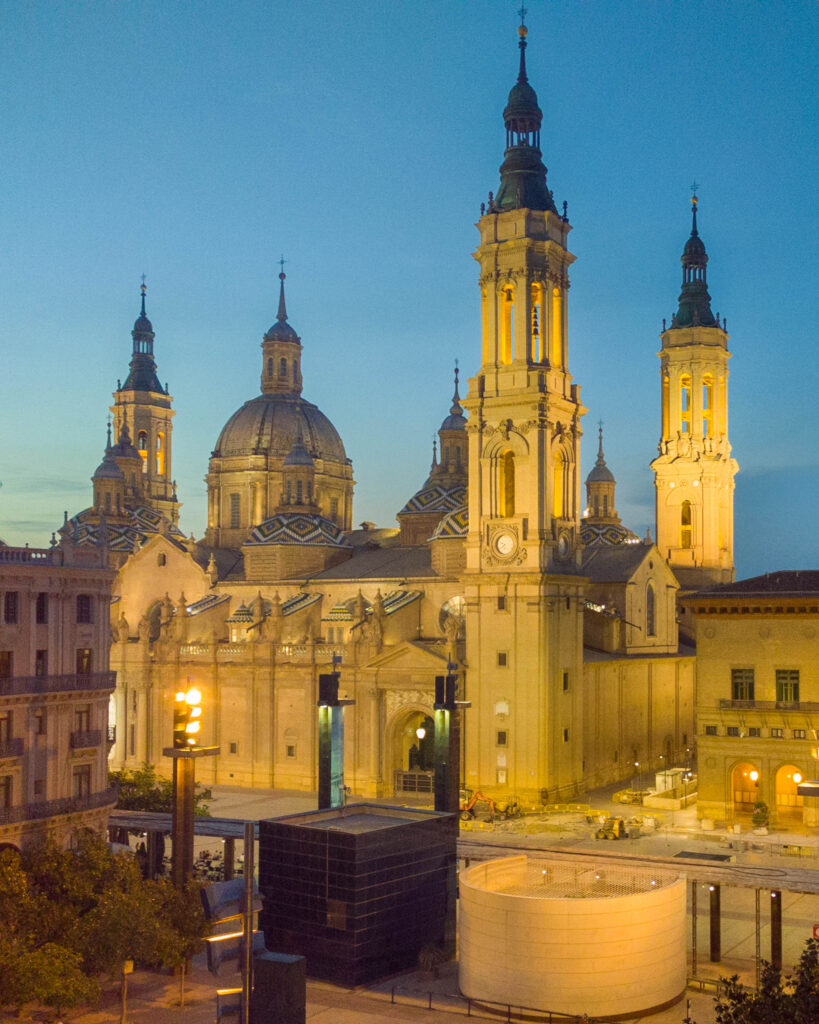


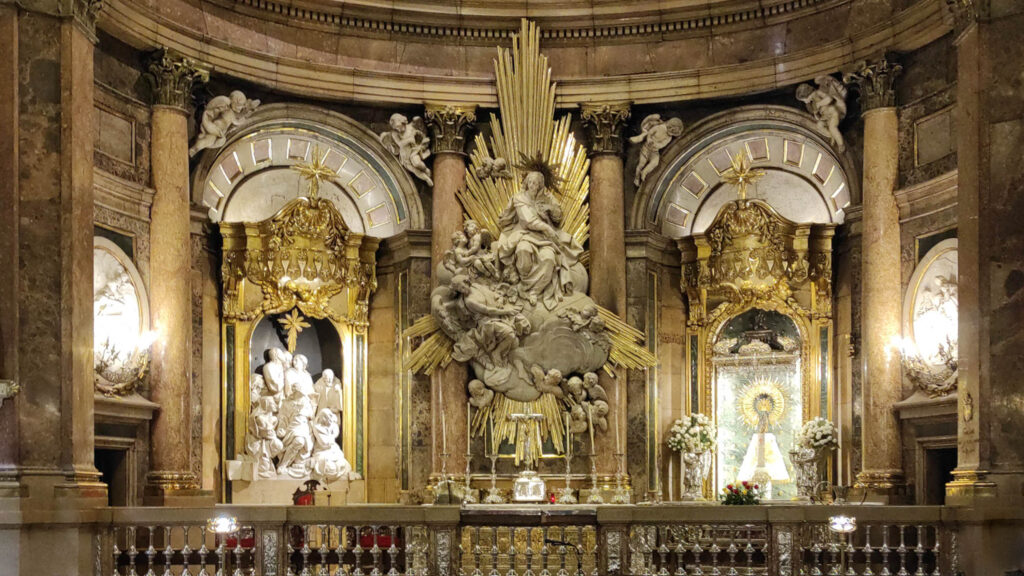
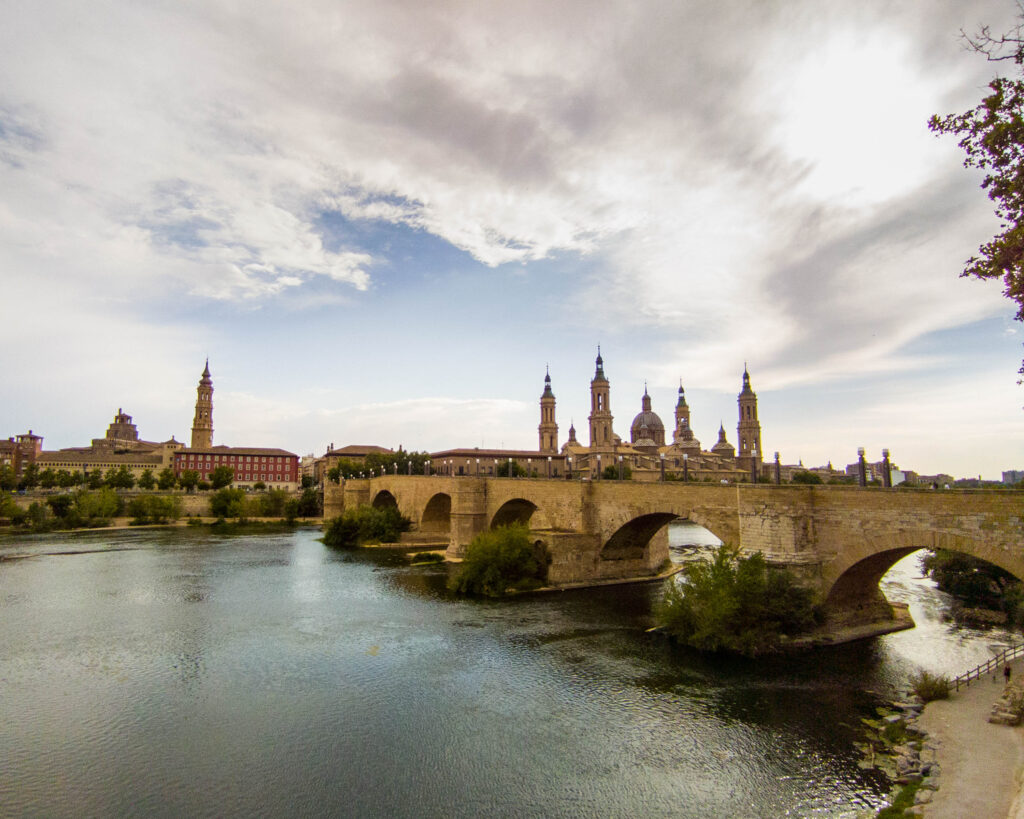
Most visitors, however, are initially captivated by the Basilica del Pilar, the city’s undeniable emblem. This expansive baroque basilica, which began construction in the 17th century, stretches along the river, with its towers and domes shaping the modern Zaragoza skyline. From the Stone Bridge at blue hour, one can capture classic reflections of the basilica and the Ebro, while inside, Goya’s frescoes and the interplay of light beneath the domes invite more intimate compositions. Around Plaza del Pilar, several other iconic buildings contribute to the city’s visual narrative. The Renaissance Lonja de Zaragoza, once a merchants’ exchange and now an exhibition hall, presents a sober, geometric façade that is striking in black and white. Nearby, the neoclassical city hall provides balance to the square, and the monument to Goya offers a human focal point amidst the monumental architecture. For photographers, Zaragoza is less about checking off sights and more about tracing historical layers through its architecture. In a single afternoon, one can transition from Roman stones to Islamic arches, Mudéjar towers, and baroque domes, each offering unique light, color, and texture. It is this continuity of history within the urban fabric that makes Zaragoza such a rewarding city to photograph—and one that deserves far more space on every photographer’s memory card.