

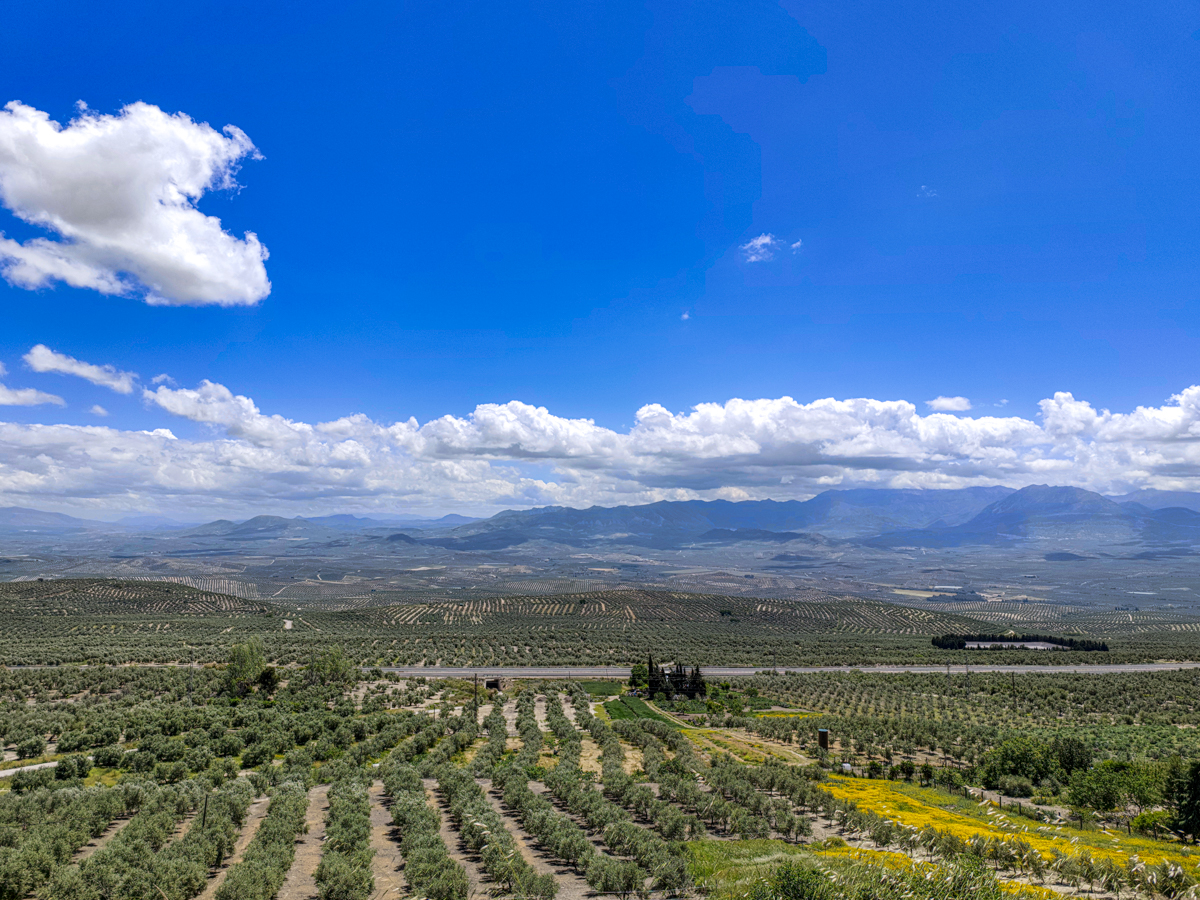
Úbeda and Baeza, two municipalities declared UNESCO World Heritage Sites in 2003, are breathtaking and certainly merit a visit. Perched on a high plateau in the province of Jaén, these cities exude a contemplative aura, surrounded by an endless expanse of olive trees that gently ripple toward the horizon. As one approaches, the harmony between landscape and architecture becomes immediately apparent; a dialogue between cultivated nature and human history refined over centuries. Úbeda reveals itself with quiet confidence. Its Renaissance palaces, noble squares, and finely proportioned façades are not designed to impress at first glance but to reward careful observation. Strolling through the Plaza Vázquez de Molina, I experienced a sense of balance rarely found elsewhere: stone warmed by Andalusian light, architecture shaped by Italian influence yet deeply rooted in local tradition. Úbeda’s beauty lies in its restraint. It does not seek admiration; it assumes it will come in time. Baeza, in contrast, possesses a more introspective air. As a historic university city, it feels reflective, almost scholarly. Its cathedral, former seminary, and arcaded streets invite slower movement and quieter thought. Here, history feels less monumental and more lived-in. It is easy to imagine generations passing through these same streets, carrying ideas rather than ambitions, contributing to a legacy built as much on intellect as on stone.



What most profoundly connects Úbeda and Baeza is their setting. The surrounding olive groves, vast, orderly, and timeless, constitute one of Europe’s most distinctive cultural landscapes. These groves are not merely agricultural; they are civilisational. For millennia, these trees have shaped local life, cuisine, rhythms, and identity. Standing at the edge of either city at dusk, watching the light fade over the silvery leaves, reveals how deeply place and history are intertwined here. Úbeda and Baeza do not overwhelm visitors. They invite calm attention, rewarding those who are willing to slow down and observe closely. In their streets and the fields that surround them, one senses continuity rather than nostalgia—an enduring elegance that feels neither preserved nor performed, but simply, confidently alive. One of my favorite hidden corners lies just beyond the expected paths, where the cities seem to exhale. In Baeza, it is a small, almost anonymous terrace near the old university walls, overlooking the olive groves rather than the monuments. There is no grand marker, no explanatory plaque—only a low stone wall, the sound of wind moving through the trees, and an uninterrupted view of the landscape that defines this region. From there, the cities feel less historical and more human. The Renaissance façades recede, leaving a quiet understanding of place: the patience of the olive trees, the measured pace of life, and the sense that history here was never rushed. It is a corner that asks nothing of the visitor except stillness, and perhaps that is why it stays with me longest.


The ideal time to explore Úbeda and Baeza is undoubtedly in the late afternoon, transitioning into early evening. During this period, the cities are bathed in a transformative light. The intense Andalusian sun softens, and the Renaissance stone that dominates both towns takes on warm, honeyed hues. Architectural details that might seem austere at midday suddenly acquire depth and texture, with shadows adding rhythm to façades and squares. Walking becomes a pleasure rather than a chore, and the cities appear to slow their pace to match your own. This is also when the surrounding landscape truly shines. From vantage points near the city edges, the olive groves stretch endlessly beneath a gentler sky, their silvery leaves catching the last light of the day. The scene exudes a timeless, almost meditative quality, shedding light on why these places have inspired a profound sense of continuity through the ages. As early evening unfolds, local life subtly reawakens. Streets that were once quiet begin to bustle again, cafés reopen, and conversations fill the plazas. This is the perfect time not only to observe Úbeda and Baeza but to immerse oneself in them—unhurried, attentive, and fully present. For those who cherish solitude and reflection, early morning offers a different yet equally rewarding experience. However, for a harmonious blend of beauty, comfort, and atmosphere, the hours before sunset are the most generous and revealing.