
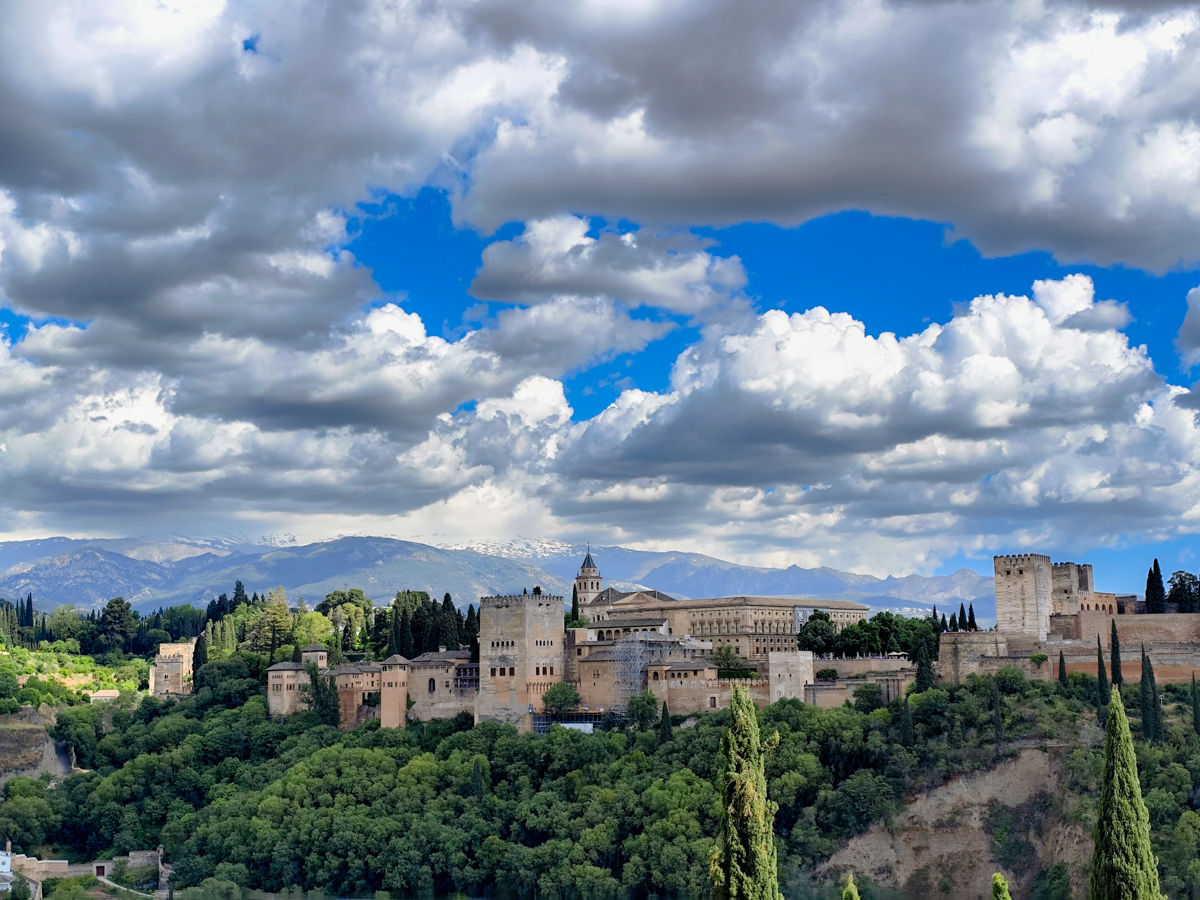
Some cities leave a fleeting impression, while others linger in your mind, like a recurring melody. Granada is one of the latter. I have visited this city many times, since my first visit in 2000, and each visit feels less like a journey and more like resuming an ongoing conversation. Granada reveals itself gradually, through the interplay of light and shadow rather than grand displays. This is most evident in the Alhambra. Viewed from a distance, it rises above the city like a patient guardian, captivating in its presence; experienced up close, it becomes profoundly intimate. The palaces do not overwhelm with their size but with their precision; water whispering through marble channels, arches that seem to breathe, and calligraphy that transforms walls into sentences. Even after five visits, I traverse the Alhambra with deliberate slowness, knowing that rushing would be a form of disrespect. Yet Granada is much more than its most renowned monument. What draws me back is the life that unfolds beneath the red walls, particularly in the historic city center. The narrow streets around the Cathedral and the Alcaicería create a dense, walkable world where daily routines and centuries of history coexist seamlessly. Mornings here begin gently: café terraces fill with locals lingering over coffee, newspapers folded beside small glasses, conversations unfolding without urgency. There is a confidence in this unhurried rhythm, as if the city has long understood that time is not to be conquered, only inhabited. Walking through the center, one senses how deeply Granada’s lifestyle is rooted in continuity. Small family-run shops remain, some unchanged for decades, offering the same crafts, spices, or books to new generations. Evenings bring a quiet transformation. As the light softens, bars come alive, and the ritual of tapas begins; not as a performance for visitors, but as an extension of everyday social life. It is here, standing with a small plate in hand, that Granada feels most itself: convivial, understated, generous.



The historic quarters of Albaicín and Realejo add further layers to this experience. From the Albaicín, with its whitewashed houses and cobbled paths, the Alhambra appears across a valley, not as a monumental presence but as a conversational one, framed by cypress and sky. Each visit has revealed a different Granada from these vantage points—sometimes golden, sometimes austere, yet always dignified. Realejo, once the Jewish quarter, merges history with a distinctly contemporary energy, reminding visitors that Granada is not preserved in amber but actively lived. Reflecting on my first visit in 2000, I realize how much both the city and my perception of it have matured. Granada has remained remarkably true to itself, offering just enough change to reward return visits. It has never sought to impress me anew; instead, it has allowed me to notice more. Granada is undoubtedly beautiful, but here, beauty is not an adornment. It is structural, embedded in how the city breathes, moves, and remembers. Returning to Granada is a reminder that depth does not demand noise and that some places do not fade with familiarity. They deepen.